
Waterfall Countertops Explained: Are They Worth It?

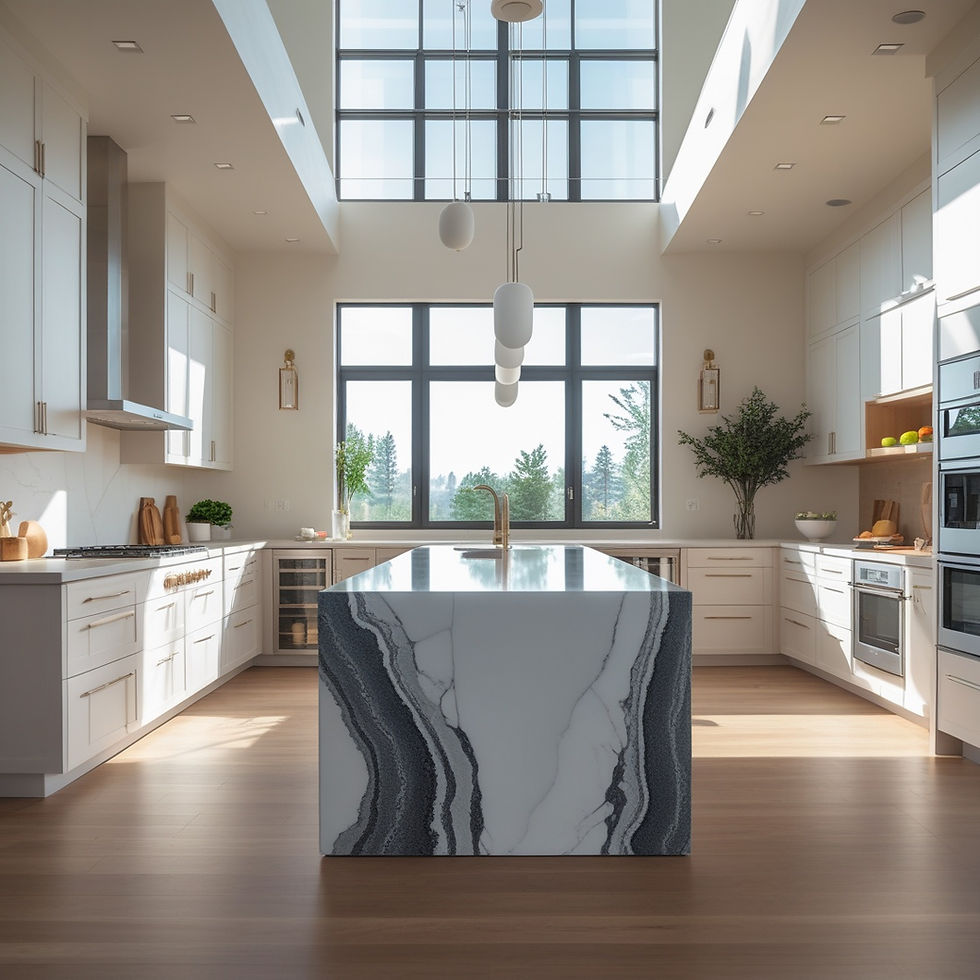
Waterfall countertops extend the countertop material down the sides of a kitchen island or cabinet, creating a seamless, floor-to-ceiling visual effect. They add aesthetic appeal and protect cabinetry, but cost more than standard installations. For homeowners planning a kitchen remodel, they offer strong long-term value.
Waterfall countertops have become one of the most talked-about trends in kitchen design. Walk through any home design magazine, scroll through a renovation blog, or visit a kitchen showroom, and you will almost certainly spot one. The clean lines, the continuous surface, the way the material flows straight down to the floor — it is a look that feels both bold and refined at the same time.
But is it just a design trend, or does it offer real, lasting value? That is the question most homeowners ask before committing to the extra cost and planning involved. This post breaks down everything you need to know about waterfall countertops — from their visual appeal and practical benefits to the materials, costs, and installation considerations, so you can make a confident decision for your kitchen remodel.
What Is a Waterfall Countertop?
A waterfall countertop is a style where the countertop material continues vertically down one or both sides of a kitchen island or cabinet, all the way to the floor. The result is a smooth, uninterrupted surface that resembles a waterfall of stone or material cascading downward.
The look is most commonly achieved with quartz, granite, or marble. Each material brings its own character to the design, from the bold veining of natural stone to the clean consistency of engineered quartz.
The Aesthetic Appeal: Why Homeowners Love the Look
How the seamless design creates a visual flow
The defining feature of a waterfall countertop is continuity. There are no exposed cabinet sides, no visible wood edges, and no visual breaks. The material flows from the top surface down to the floor in one clean, connected movement. This creates a sense of structure and polish that standard countertops simply cannot replicate.
It works especially well in modern, minimalist, and industrial-style kitchens, where clean lines and strong materials take center stage. That said, natural stone versions can also feel right at home in more traditional or transitional kitchen designs.
Creating a focal point in the kitchen
A kitchen island with a waterfall edge instantly draws attention. The vertical drop of material adds height and dimension to what would otherwise be a flat surface. For homeowners looking to make a statement without adding decorative clutter, this is one of the most effective design moves available.
Showcasing the beauty of your chosen material
One of the biggest advantages of a waterfall countertop is how much of the material it puts on display. With a standard countertop, you only see the horizontal surface. A waterfall design exposes two or three faces of the slab, which is particularly striking with materials like granite or quartz.
Homeowners exploring granite countertops in NJ or quartz countertops in NJ will find that a waterfall installation turns a functional surface into a genuine design feature. The movement, depth, and pattern of natural stone become part of the room's overall character.
Practical Benefits: Function Meets Design
Protecting your cabinetry from everyday wear
Kitchen islands take a lot of daily contact. Kids lean against them, bags get dropped, chairs scrape the sides. A waterfall countertop acts as a protective shell around the island's exposed sides, shielding the cabinet structure from dents, scratches, and moisture.
This is particularly useful in busy households where the kitchen sees constant activity.
Easy to clean, with fewer crevices to worry about
Smooth, continuous surfaces are easier to wipe down than surfaces with exposed edges, joints, or decorative panels. A waterfall countertop eliminates the gap between the countertop edge and the cabinet side, reducing places where food debris and moisture can collect.
Quartz is especially low-maintenance in this regard. Homeowners researching quartz countertops in Bergen County, NJ, will find that quartz requires no sealing and resists stains well, making it a practical choice for both the horizontal and vertical surfaces of a waterfall installation.
Durability that holds up over time
Both granite and quartz are known for their resilience. Granite is heat-resistant and extremely hard, while quartz offers consistent strength across the slab with strong resistance to scratches and stains. When properly fabricated and installed, a waterfall countertop made from either material can last for decades without significant wear.
The Cost Factor: What to Expect and Is It Worth It?
Why do waterfall countertops cost more than standard installations
A waterfall countertop requires more material than a standard installation. Instead of cutting a single horizontal slab, the fabricator needs to cut additional pieces for the vertical panels and match the pattern or veining seamlessly across the joint. That matching process is skilled, time-consuming work, and it adds to the overall cost.
On average, waterfall countertops can cost anywhere from 20% to 50% more than a standard countertop installation, depending on the material chosen, the complexity of the design, and the size of the island. Natural stone with strong veining patterns tends to cost more because achieving a continuous visual flow across the seam requires careful slab selection and precision cutting.
How a waterfall countertop can increase your home's value
High-quality kitchen upgrades consistently rank among the most valuable home improvements. A well-executed waterfall countertop signals quality craftsmanship and thoughtful design, two things that appeal strongly to potential buyers. Kitchens sell homes, and a striking island with a seamless stone finish can be a genuine differentiator in a competitive market.
Long-term satisfaction and daily enjoyment
Beyond resale value, there is the simple pleasure of living in a well-designed space. A kitchen that feels beautiful and functional every day is worth a great deal. For homeowners who spend significant time in their kitchens, the upgrade from a standard countertop to a waterfall design can meaningfully improve the experience of the room.
Choosing the Right Material for a Waterfall Countertop
The material you choose will shape both the look and the performance of your countertop. Here are the main options to consider:
Granite: Natural granite offers unique veining and a timeless, high-end appearance. For homeowners interested in granite countertops in Bergen County, NJ, granite provides a classic elegance that holds its value well. It does require periodic sealing to maintain stain resistance.
Quartz: Engineered quartz is one of the most popular choices for waterfall countertops, particularly for modern kitchens. Quartz countertops for kitchens in Morris County are in high demand for good reason. Quartz is non-porous, requires no sealing, and comes in a wide range of colors and patterns that mimic natural stone.
Marble: Marble offers a luxurious, soft aesthetic, but it is more porous and prone to etching than granite or quartz. It suits formal or high-end kitchen designs, but requires more careful maintenance.
Porcelain slabs: A newer option that offers impressive durability and a wide range of visual styles, including patterns that closely resemble natural stone.
Working with Professionals: Why It Matters
A waterfall countertop is not a straightforward DIY project. The vertical seam where the horizontal surface meets the side panels needs to be cut, matched, and finished with precision. Any misalignment in the veining or pattern will be immediately visible and difficult to correct.
Working with an experienced fabricator and installer is essential. A skilled team will select slabs with compatible patterns, make precise cuts, and use the right adhesives and supports to ensure the vertical panels stay secure over time.
When planning your full kitchen remodel, it also pays to think about how your countertop will work with your cabinetry and flooring. Matching a quartz waterfall countertop with complementary kitchen cabinets in Hudson County, NJ, or coordinating it with tile flooring in NJ creates a cohesive look that feels intentional rather than piecemeal. Choosing the best kitchen cabinetry in Bergen County, NJ, alongside your countertop material, ensures the entire space tells a consistent visual story.
The same applies to flooring. The right floor tile in NJ can anchor the kitchen and complement the vertical drop of a waterfall island without competing for attention.
So, Are Waterfall Countertops Worth It?
For most homeowners planning a significant kitchen remodel, the answer is yes. Waterfall countertops offer a combination of aesthetic impact, practical protection, and lasting durability that justifies the additional cost. They elevate the look of a kitchen, showcase the beauty of quality materials, and hold up well to the demands of daily use.
The key is choosing the right material for your lifestyle and working with professionals who can execute the fabrication and installation to a high standard. When done well, a waterfall countertop becomes one of those design details that make a kitchen genuinely memorable.
From quartz and granite countertops to custom cabinetry and tile, the showroom offers everything you need to bring your kitchen vision to life.
Visit Sam's Kitchen & Bath today and take the first step toward a kitchen you will love coming home to.

Comments